How do you approach a theme that could easily become predictable?
Jaiden Anjoul: The challenge was avoiding the obvious.
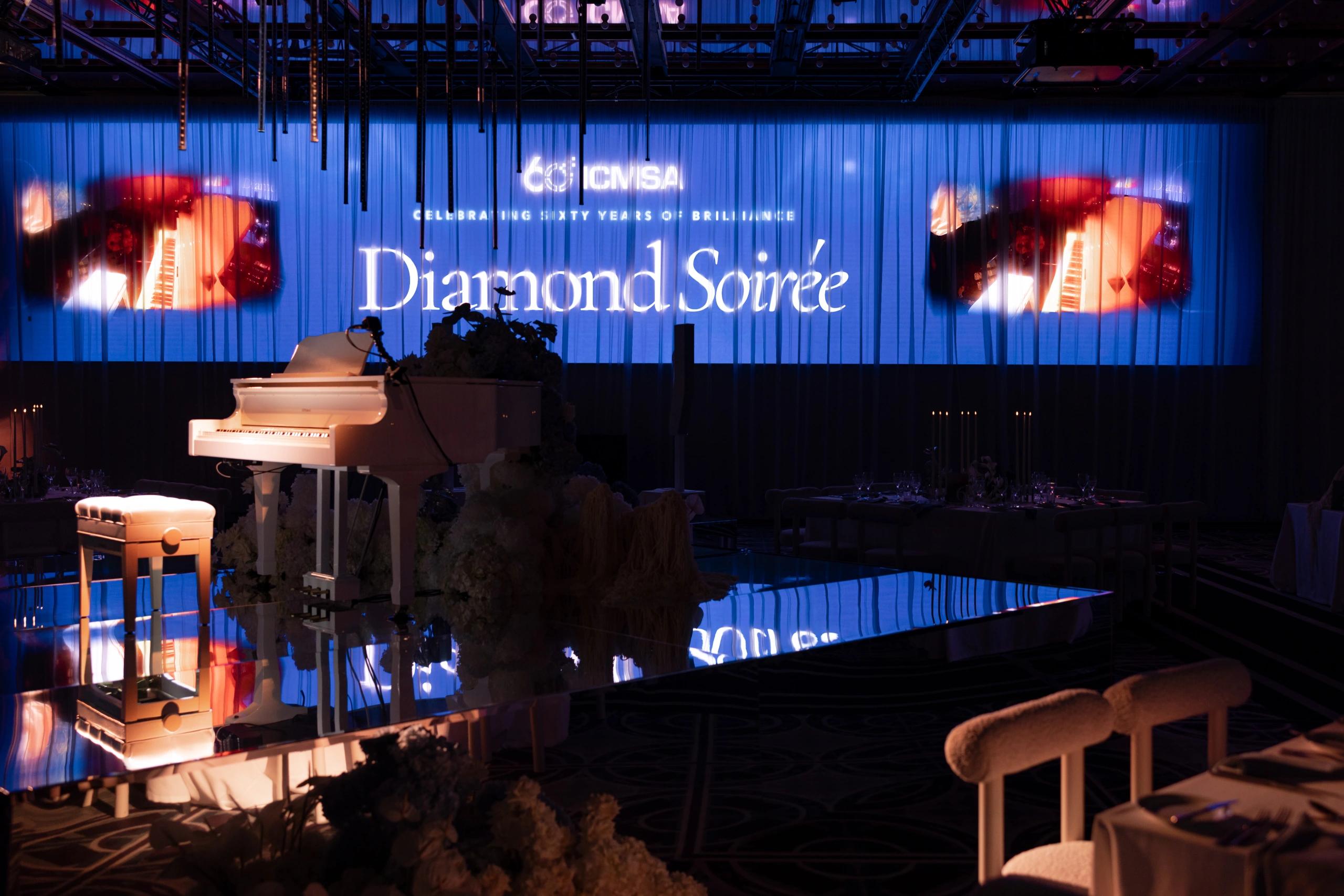
When people hear “diamond anniversary”, they immediately think of diamonds as a visual theme. We knew that if we simply filled the room with diamond imagery, it might look impressive, but it wouldn’t necessarily create a meaningful experience.
At Encore, we always try to look beyond the surface of a brief and uncover the bigger story behind it. Instead of asking how we could decorate a room around a diamond theme, we asked what a diamond represents.
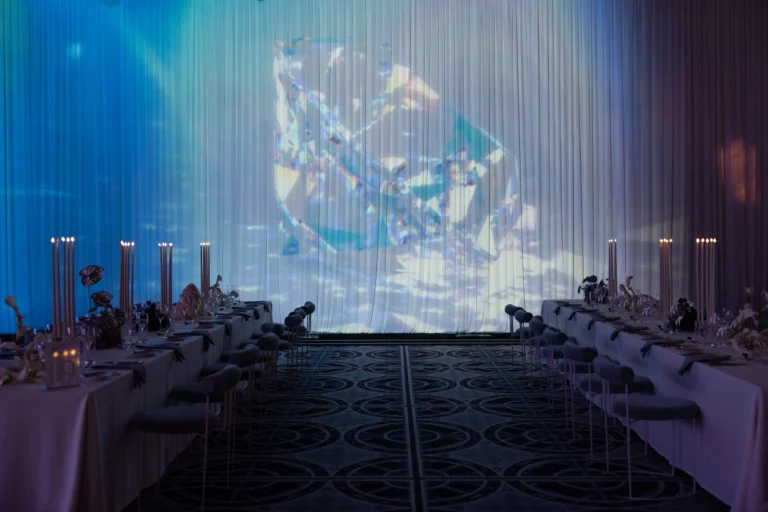
A diamond is multifaceted. It reflects, refracts and transforms light. That insight became the foundation of our creative strategy, which we called Beyond Brilliance.
Rather than celebrating a diamond anniversary literally, we used the qualities of a diamond to tell a story about the organisation itself. That strategic shift allowed us to create an experience that felt more authentic, emotional and memorable.
How did that strategy shape the experience?
Jaiden Anjoul: Once we landed on the central idea, everything became clearer.
We built the guest journey around three chapters: Reflection, Refraction and Radiance.
Reflection represented the organisation’s history and achievements.
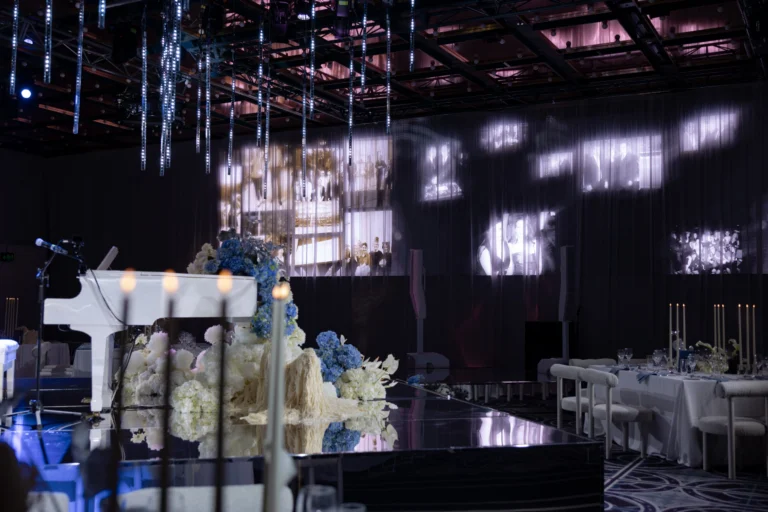
Refraction focused on where the organisation is today and the many people who have contributed to its success.
Radiance looked toward the future and what comes next.
For us, the value of a strong strategy is that it creates alignment. Instead of making separate decisions about content, staging, lighting, entertainment and styling, every element can be measured against one clear idea.
That’s a key part of Encore’s process. The strategy becomes the framework that guides creative and production decisions, helping ensure every component contributes to a cohesive guest experience rather than operating in isolation.
Why is that important?
Jaiden Anjoul: Strong creative strategy helps you make better decisions.
Without a clear idea, it’s easy for events to become a collection of individual elements that happen to sit in the same room. You might have great content, impressive technology and beautiful styling, but they don’t necessarily work together.
At Encore, strategy provides the filter for every creative decision. It helps us focus on what matters most and ensures each choice serves a clear purpose.
For this event, the strategy became our reference point throughout the production process. If an idea didn’t support the story we wanted to tell, it didn’t move forward. If it strengthened the narrative, we explored it further.
That approach creates experiences that feel more intentional, immersive and memorable because every element is working towards the same goal.
How did the design support the story?
Jaiden Anjoul: We used design to reinforce the idea rather than dominate it.
A common misconception is that design starts with selecting colours, textures or visual styles. For us, design starts with understanding the story we’re trying to tell.
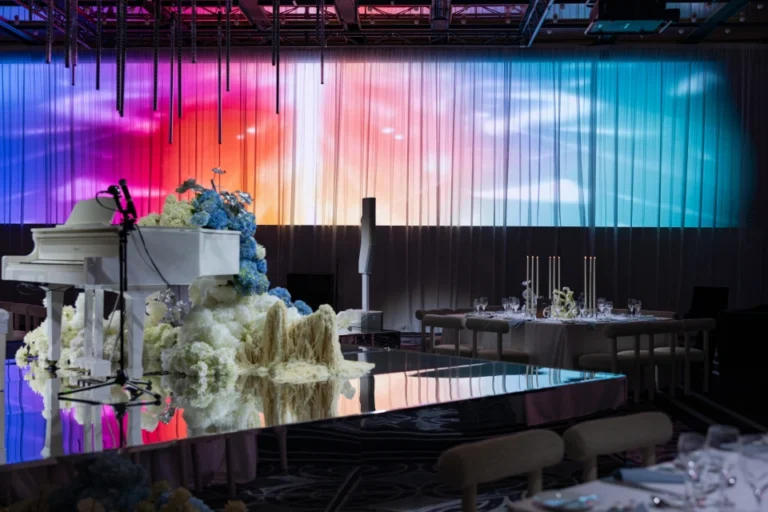
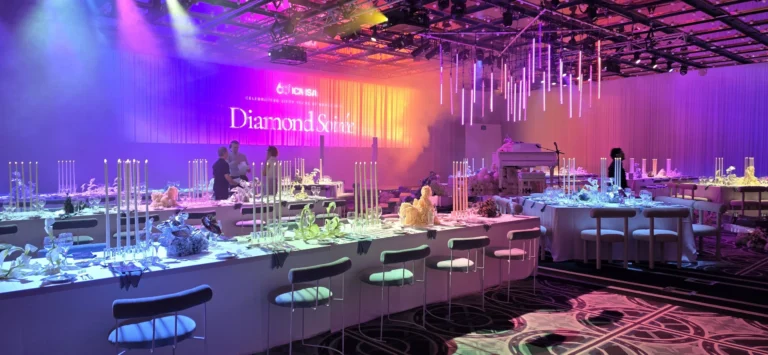
Reflection became a recurring design principle throughout the event. Crystal elements, mirrored surfaces and lighting treatments all helped express that theme, but they were there to support the narrative rather than become the story themselves.
We also looked for opportunities to create contrast. Sharp, geometric stage designs were balanced with softer textures, sculptural florals and layered fabrics. That tension helped the environment feel sophisticated and contemporary.
Every design decision was considered through the lens of the strategy. The goal wasn’t to add visual elements because they looked impressive. The goal was to strengthen the guest journey and create a more immersive experience.
How do you stop technology from becoming the focus?
Jaiden Anjoul: Technology should serve the experience, not define it.
One of Encore’s strengths is combining creative strategy with production expertise. That means technology is never treated as the destination. It’s a tool used to bring an idea to life.
We used projection, LED and lighting throughout the space, but we were careful about how those tools were applied.
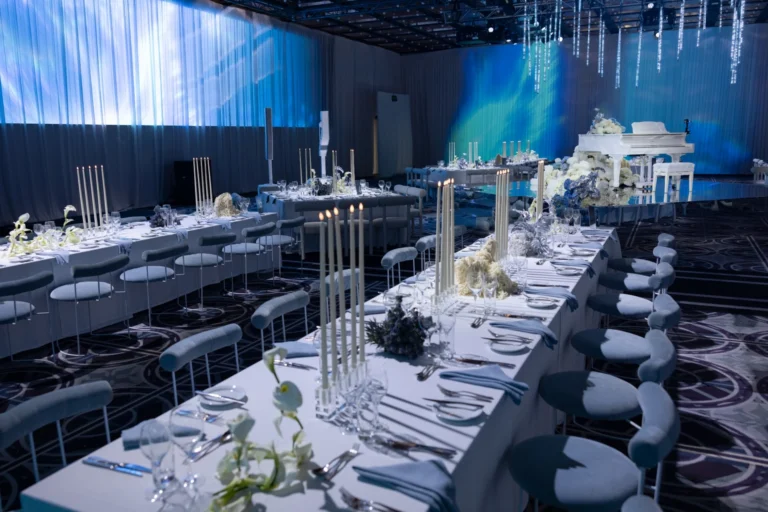
One example was the use of sheer chiffon draping. Rather than aiming for maximum clarity, we deliberately softened the projection surfaces. The effect created depth, texture and atmosphere, making the room feel more immersive and dreamlike.
The goal wasn’t to showcase technology. The goal was to create a feeling.
When the client entered the room and described the space as “dreamy”, we knew we had achieved what we set out to do.
That moment reinforced an important principle: guests rarely remember the technology itself. They remember how an experience made them feel.
What is the biggest lesson from this project?
Jaiden Anjoul: Great event experiences come from strong ideas.
The most important part of this project wasn’t a piece of technology, a styling element or a stage design. It was establishing a clear creative strategy from the beginning.
Once we had that vision, every decision became easier. The strategy helped align the experience, guide the production process and ensure every creative choice served a purpose.
That’s what differentiates Encore’s approach. We don’t start by asking what an event should look like. We start by asking what challenge needs to be solved, what story needs to be told and how guests should feel throughout the experience.
When those questions are answered first, technology, design and production can work together to create something far more powerful than any individual element on its own.