So you have found the perfect venue for your next event, now you need to start to think about the room layout and in particular the seating style for your audience.
Discover the Best Seating Plan for Your Event
October 20, 2025
11 Seating Arrangements Used for Events
As discussed in previous blogs, the communication factor on any event is critical. Whether you are setting up a business presentation, training classroom, hosting a full-scale gala dinner or product launch, the arrangement of the seating can make all the difference. You have invited your audience to communicate a message, so it’s important that your audience is seated in the best way to achieve the maximum impact for your message!
In this latest blog Encore highlights the 11 most popular seating styles so you can choose the best option for your next event.
1. Theatre
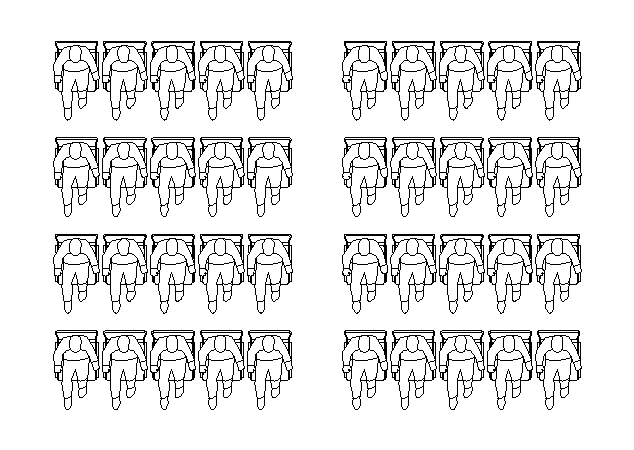
A Theatre style seating arrangement it the simplest, and most common, arrangement used in events. The style reflecting the seating found in a theatre or cinema with chairs aligned in consecutive straight rows. Some venues have the ability to have these in different heights like a University lecture which allows for more seats in a smaller space.
Positives:
- All of the seats are facing forwards towards the front of the function room.
- Maximum seated capacity is achieved for the function room.
Negatives:
- The audience is closed in, needing to push past other audience members to enter/exit the seating area.
- Aisles are required to ensure sufficient access to seating area.
- There is no provision for note taking or consumption of plated food and beverage.
- Audience interaction is hindered as audience members don’t face each other.
Popular for meetings, Annual General Meetings, product launches
2. Classroom
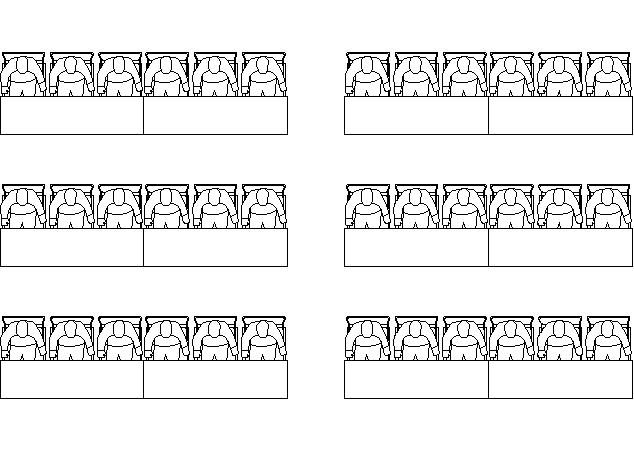
As the name suggests, the Classroom seating style reflects the seating found in a school or lecture theatre, with chairs and trestle tables aligned in consecutive straight rows.
Positives:
- All of the seats are facing forwards towards the stage and front of the function room.
- Allows for note taking and consumption of plated food and beverage
- Great for keeping attention on the stage and speaker content rather than being distracted by facing another attendee.
Negatives:
- Again the audience is closed in, making it difficult for audience members to enter or exit
- Aisles are required to ensure sufficient access to seating area.
- Seating capacity is reduced by the trestle tables.
- Audience is less likely to interact as they are not facing each other.
Popular for training, conferences, sales kick-offs and product launches.
3. Herringbone
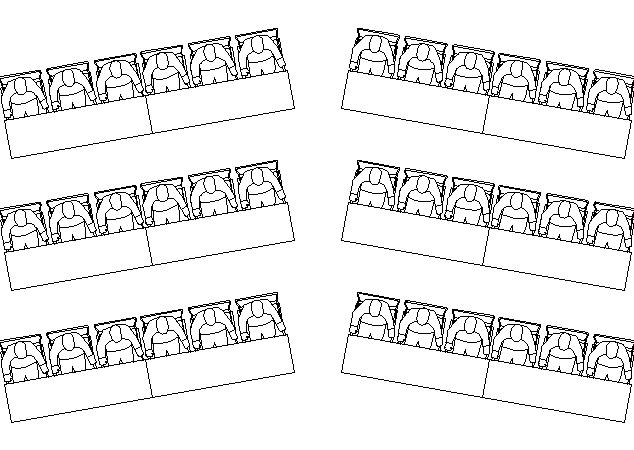
This style is very similar to Classroom, however with a Herringbone seating arrangement, each consecutive row of chairs and tables are angled inwards.
Positives:
- All of the seats are angled inward towards the podium.
- All of the seats are facing forwards towards the front of the function room.
- Allows for note taking and consumption of plated food and beverage.
Negatives:
- Again the audience is closed in, making it difficult for audience members to enter or exit
- Aisles are required to ensure sufficient access to seating area.
- Seating capacity is reduced by the trestle tables.
- Audience is less likely to interact as they are not facing each other.
Popular for training, conferences, lectures.
4. U Shape
As the name suggests, this seating style is in the shape of the letter U, with the tables & chairs arranged in an open-ended configuration with the audience facing inwards.
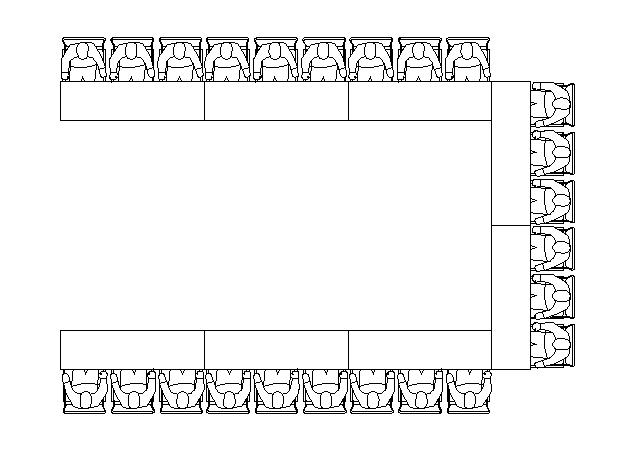
Positives:
- The open end allows for a focal point or presentation area.
- Allows presenter to approach and engage with each audience members.
- Audience interaction is enhanced, with audience members facing each other.
Negatives:
- Inefficient use of floor space, with seating capacity reduced.
- A large proportion of the audience are seated side-on to the presentation area.
Popular for training, conferences, workshops, meetings
5. Horse Shoe
This style is very similar to U Shape, however there are no tables, only chairs arranged in an open-ended U-Shaped configuration with the audience facing inwards.
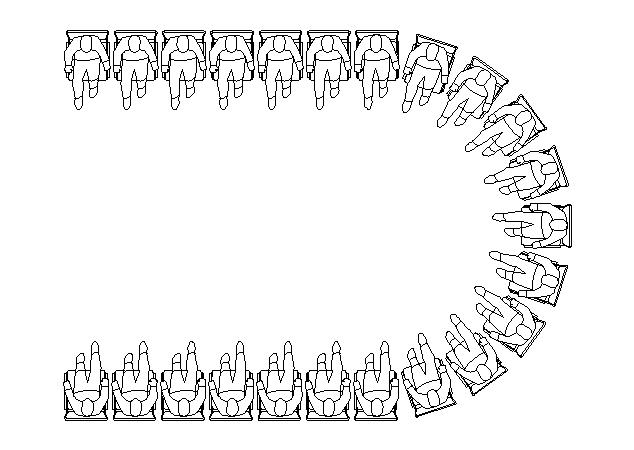
Positives:
- The open end provides a focal point and allows for a presentation area.
- Allows presenter to approach and engage with each audience member.
Negatives:
- Inefficient use of floor space, with seating capacity reduced.
- Aisles are required to ensure sufficient access and egress to seating area.
- There is no provision for note taking or consumption of plated food and beverage.
Popular for large meetings, presentations, team briefings
6. Hollow Square
This style is similar to U Shape, however there are four sides and no open end, with the audience all facing inwards.
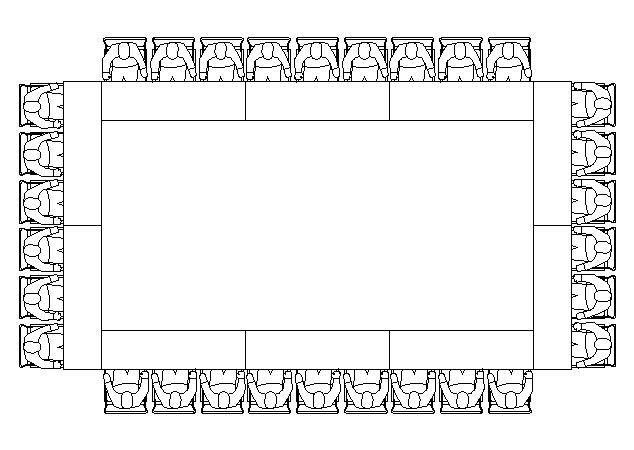
Positives:
- Audience interaction fully enhanced, with audience members all facing each other
- Allows audience to consume plated food and beverage easily
Negatives:
- Seating capacity is reduced
- Does not allow for a main presentation area or focal point.
Popular for discussions
7. Boardroom
This style is a smaller version of the Hollow Square or U Shape, however there is a large elongated table, with the audience all facing inwards.
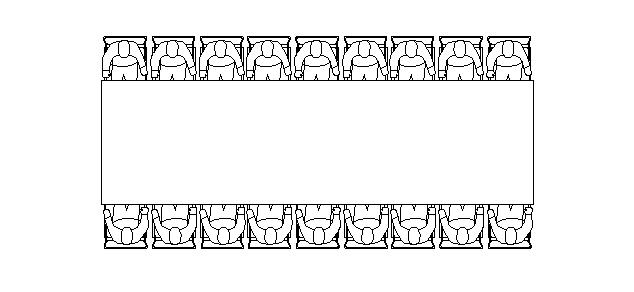
Positives:
- Encourages audience interaction as they all face inwards
Negatives:
- Restricts the position of a presentation area or focal point, typically to the end of the table
Popular for small meetings, one on one interviews, small presentations, team briefings.
8. Banquet
A Banquet seating style is similar to a round dinner table, with the audience seated around the circumference of the table facing inwards.
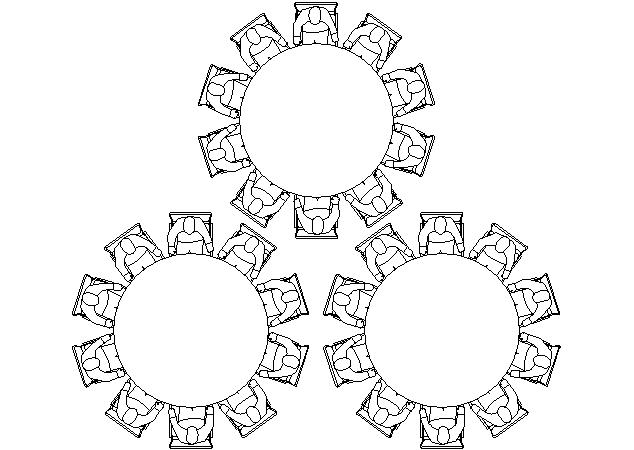
Positives:
- Audience interaction fully enhanced, with audience members all facing each other.
Negatives:
- The audience is closed in, needing to push past other audience members to enter/exit the seating area.
- Line of sight can be interrupted for guests facing away from the stage, and similarly for those having difficulty seeing past guests blocking their view.
Popular for gala dinners, awards night, Christmas parties, weddings and other informal events.
9. Cabaret
The Cabaret seating style is similar to Banquet, however there is an open end, with the audience seated in an arc facing forwards to the stage area.
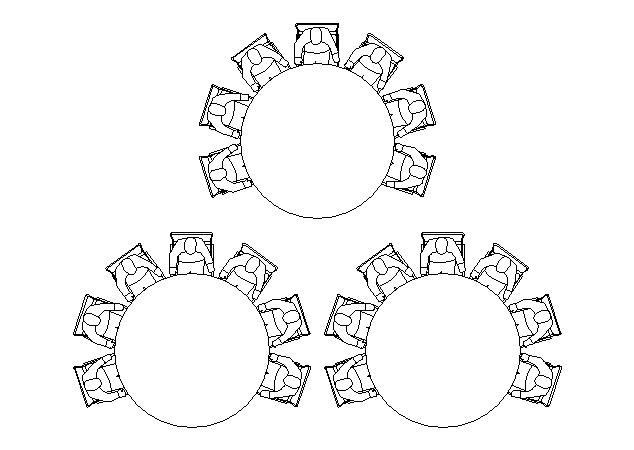
Positives:
- The open end allows for a focal point or presentation area so no line of sight is compromised.
Negatives:
- Inefficient use of floor space, with seating capacity reduced.
Popular with meetings such as training sessions, awards nights and gala dinners.
10. Cocktail
This style is unlike any others with no chairs or tables. It is literally standing space.
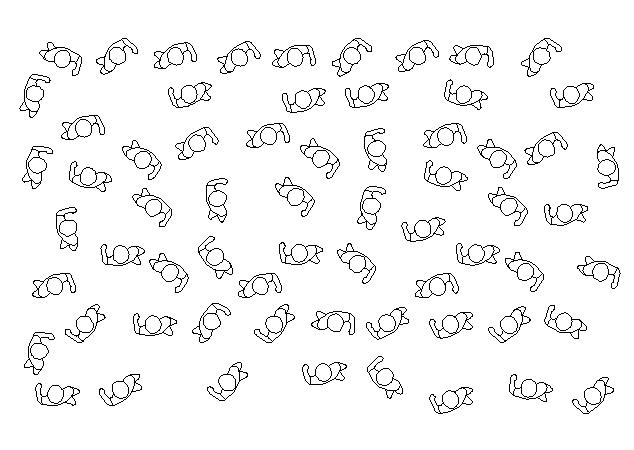
Positives:
- Most efficient use of floor space, with maximum room capacity available.
- Audience interaction greatly enhanced, with audience members able to freely mingle and roam.
Negatives:
- Audience is standing with no opportunity to sit and rest.
- Does not allow for note taking or consumption of plated food and beverage.
Popular for cocktail parties, weddings, Christmas parties and other social events.
11. Lounge Zone
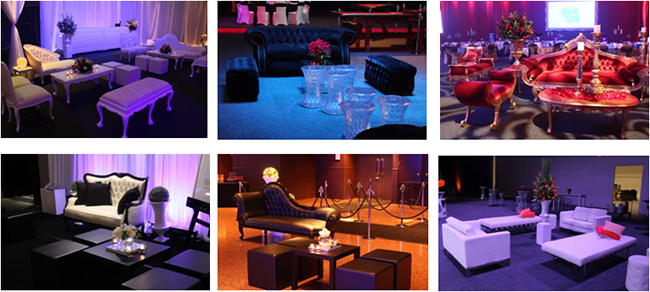
To refresh the formal vibe and encourage networking, event planners are opting to include a new seating arrangement in their mix – introducing the Lounge Zone. Add sofas, chairs, coffee tables, bar tables and ottomans in clusters to form this creative space.
Positives:
- Great for encouraging networking and giving attendees an informal seating area to relax and mingle
- Can be used to create a sense of space within a larger venue space and the style / type of furnishings can be used to enhance your event’s theme.
Negatives:
- Some venues don’t have the space to allow for a lounge zone
- A relaxed, styled area may not suit all event types.
If you would like further information about organising your event we would be pleased to help you. Feel free to give our team of experienced event professionals a call on 1800 209 099.